Wednesday

What is sentence ? Write its components with example?

 What is sentence ? Write its components with example? 


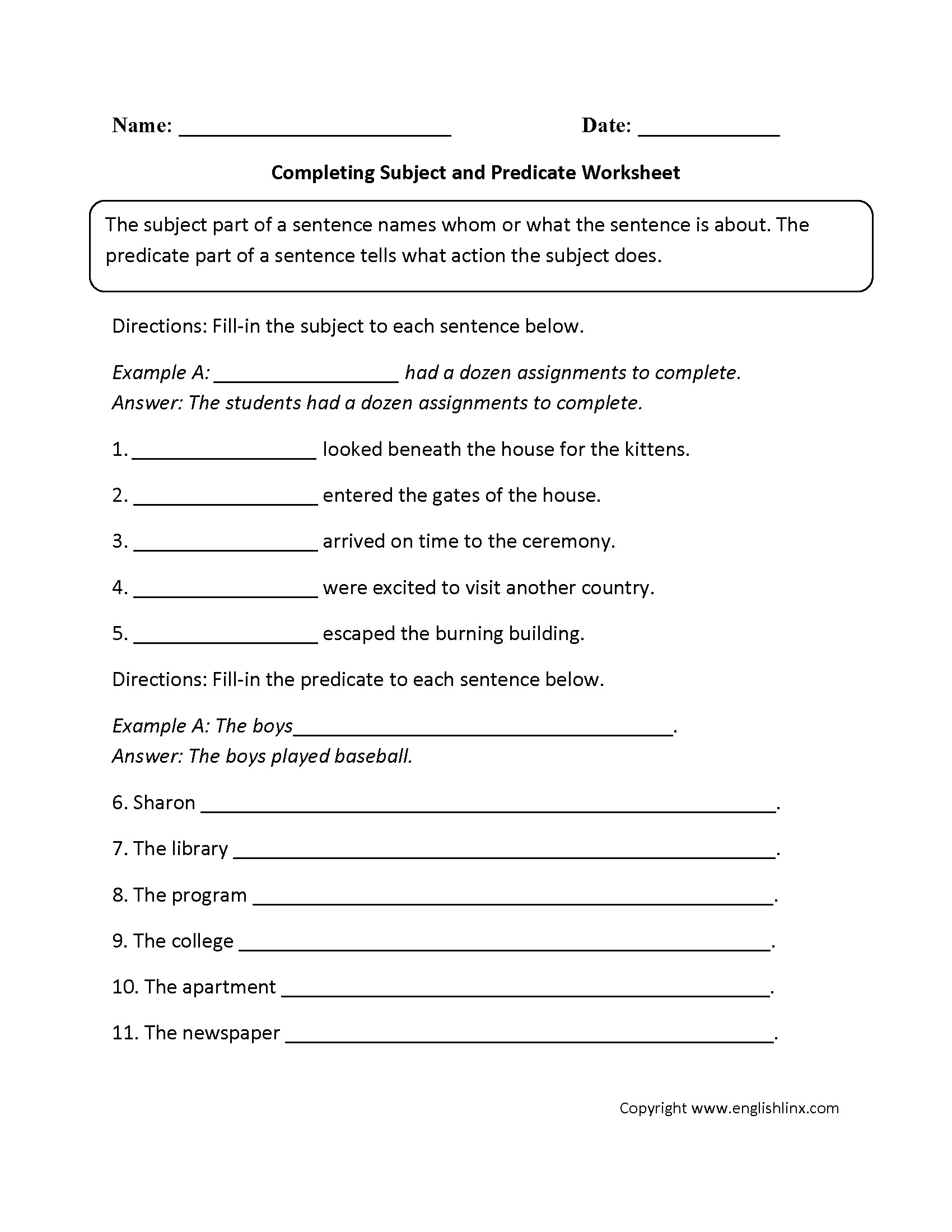
Sentence:

 Definition :

Group of words which has both subject and verb is called sentence.

 for example :

1: I eat an Apple.

 A group of word which gives correct and complete meaning is called sentence.

 Component of sentence:

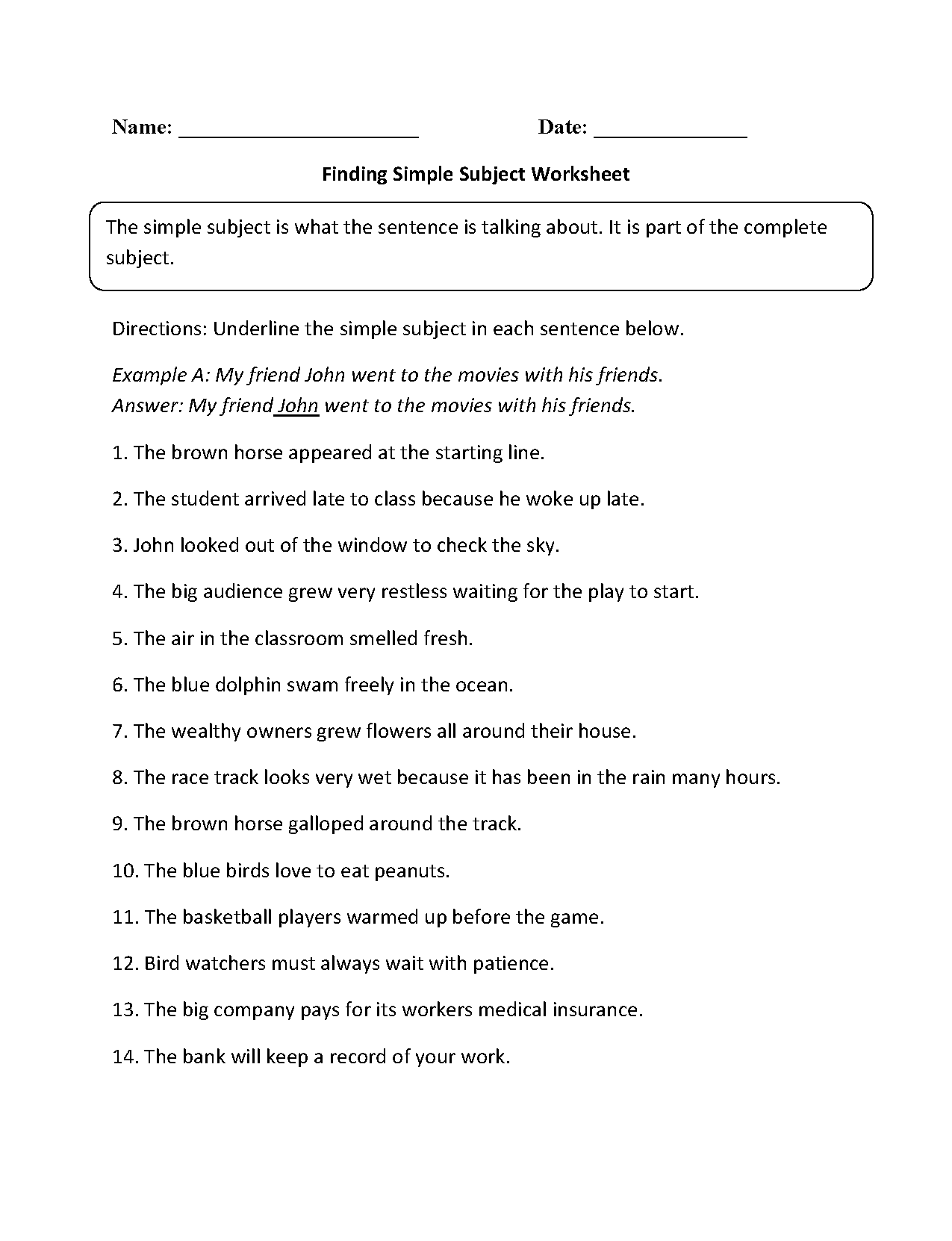
 1:Subject:

 A part of sentence about which the information is given.

 for example:

1: Bilal drinks Juice .

2: she writes a letter.

2: Object:

 A part of sentence which receive the action.

 for example:

 1:She cooks biryani.

 2:The teacher beat me.

3: Predicate:

 Without subject rest part of the sentences is called predicate. 

For example:

 1:Bilal swims in the winter.

 2:we lives in Pakistan .


Monday

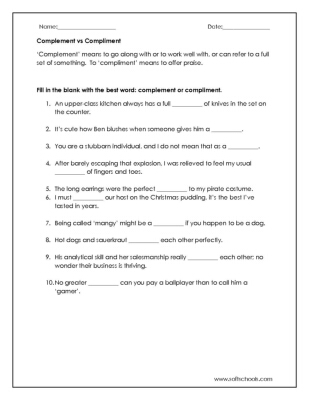
what is "Complement " its definition and example?

 what is "Complement " its definition and example? 

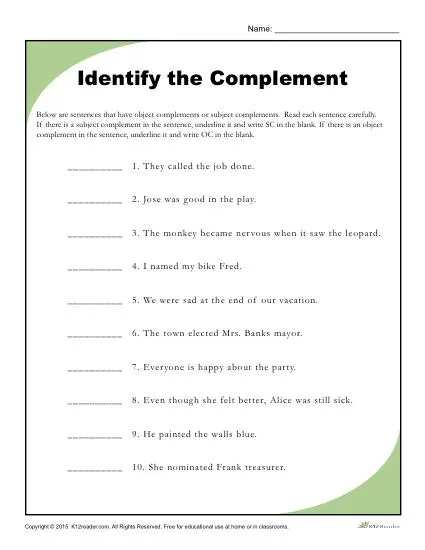
Complement:

 Definition:

 Is that part of sentence that says something about subject or object of a sentence.

It adds extra information to the sentence.

 For example:

1: She is sleeping.

2: He is  injured.

3: Ali  is a teacher.

4: I like my clothes blue.

5: we made him upset.

 A compliment is always noun or Adjective .


What is "Ever " with definition and example ?


What is "Ever " with definition and example ? 

Ever :

 Definition:

 It is an indefinite adverb of time which means "at any time" in the past up to now.

 It is used to ask if an action has a happen at anytime in the past up to the present.

 For example:

1: Have you ever Climb a Tree?

2: Have you ever got angry ?

3: Have you ever sing a song ?

4: Has she ever dance in the party ?

5: Has he ever seen a ghost ?

 It is used In interrogative sentences .


Sunday

Grammar structure : Make / Keep + object + Adjective :

  Grammar structure : Make / Keep + object + Adjective : 

Definition:

 It is a structure in which make show change in the state of something or someone.

 However

 keep does not show change in the state of someone or something showing that someone or something remain in the same state.

 For example:

1:The rain made the earth wet.

2: The medicine will make him healthy.

3: Exercise Can keep her thin.

4: Difficult job  can keep you busy .

Summary:

The two structures are similar but convey a different meaning:

Keep + adjective focuses on the condition of the subject.

Keep + object + adjective is more focused on the condition of the object. The subject is responsible for maintaining it.


Saturday

What is compound modifiers with example?


What is compound modifiers with example?

Compound Modifier:

 Definition:


It consist of numbers and similar noun connected through hyphen. It Modified the noun used after it and therefore it function as an adjective in a sentence.

 For example:

 1: I have a car it has  two  doors.

  I have a two-doors car.

 2:He wrote a book it has 200 pages.

  He wrote 200-pages book.


Friday

What is phrase ? Define with example .

What is phrase ? Define with example .

Phrase:

Definition: 

A group of words which has either subject or verb but not both of them .

                                        or

Give us incomplete sense.

                                               or 

Group of words which give correct but incomplete meaning is called phrase. 

For example: 

1: Going for shopping .

2: An old man in the hospital. 

3: Ahmad is a teacher . 


Thursday

Sir Muhammad Iqbal POET AND PHILOSOPHER : Influence and position

Sir Muhammad Iqbal POET AND PHILOSOPHER :


Sir Muhammad Iqbal, also spelled Muhammad Ikbal born November 9, 1877, Sialkot, Punjab, India [now in Pakistan]-died April 21, 1938, Lahore, Punjab), poet and philosopher, known for his influential efforts to direct his fellow Muslims in British-administered India toward the establishment of a separate state, an aspiration that was eventually realized in the country of Pakistan. He was knighted .


Early life and career:


Iqbal was born at Sialkot, India (now in Pakistan), of a pious family of small merchants and was educated at Government College, Lahore. In Europe from 1905 to 1908, he earned his degree in philosophy from the University of Cambridge, qualified as a barrister in London, and received a doctorate from the University of Munich. His thesis, The Development of Metaphysics in Persia, revealed some aspects of Islamic mysticism formerly unknown in Europe.


On his return from Europe, he gained his livelihood by the practice of law, but his fame came from his Persian- and Urdu-language poetry, which was written in the classical style for public recitation. Through poetic symposia and in a milieu in which memorizing verse was customary, his poetry became widely known, even among the illiterate. Almost all the cultured Indian and Pakistani Muslims of his and later generations have had the habit of quoting Iqbal.


Before he visited Europe, his poetry affirmed Indian nationalism, as in Nayashawala ("The New Altar")" but time away from India caused him to shift his perspective. He came to criticize nationalism for twofold reason: in Europe it had led to destructive racism and imperialism, and in India it was not founded on an adequate degree of common purpose In a speech delivered at Aligarh in 1910, under the title "Islam as a Social and Political Ideal," he indicated the new Pan-Islamic direction of his hopes. The recurrent themes of Iqbal's poetry are a memory of the vanished glories of Islam, a complaint about its present decadence, and a call to unity and reform. Reform can be achieved by strengthening the individual through three successive stages: obedience to the law of Islam, self-control, and acceptance of the idea that everyone is potentially a vicegerent of God (nd ib, or mu min). Furthermore, the life of action is to be preferred to ascetic resignation.


Three significant poems from this period, Shikwah ("The Complaint"), Jawab-e shikwah (The Answer to the Complaint"), and Khizr-e rah("Khizr, the Guide"), were published later in 1924 in the Urdu collection Bang-e dara ("The Call of the Bell"). In those works Iqbal gave intense expression to the anguish of Muslim powerlessness. Khizr (Arabic Khidr), the Qur'anic prophet who asks the most difficult questions, is pictured bringing from God the baffling problems of the early 20th century.


What thing is the State? or why

Most labour and capital so bloodily disagree?

Asia's time- honoured cloak grows ragged

and wears out......

For whom this new ordeal, or by whose hand prepared?

(English trans by VG. Kiernan)


Notoriety came in 1915 with the publication of his long Persian poem Asrar-e khudi (The Secrets of the Self ). He wrote in Persian because he sought to address his appeal to the entire Muslim world. In this work he represents a theory of the self that is a strong condemnation of the self-negating quietism (ie., the bel that perfection and spiritual peace are attained by passive absorption in contemplation of God and divine things) of classical Islamic mysticism, his criticism shocked many and excited controversy admirers steadily maintained that creative self-affirmation is a fundamental Muslim virtue, his critics he imposed themes from the German philosopher Friedrich Nietzsche on Islam.


The dialectical quality of his thinking was expressed by the next long Persian poem, Rumuz-e bikhudi 1918, The Mysteries of Selflessness). Written as a counterpoint to the individualism preached the Airar-e khudi this poem called for self-surrender.


Lo, like a candle wrestling with the night

O'er my own self 1 pour my flooding tears

I spent my self, that there might be more light,

More loveliness, more joy for other men

(English trans by AJ Arberry)


The Muslim community, as Iqbal conceived it, ought effectively to teach and to encourage generous service to the ideals of brotherhood and justice. The mystery of selflessness was the hidden strength of Islam Ultimately, the only satisfactory mode of active self-realization was the sacrifice of the self in the service of causes greater than the self. The paradigm was the life of the Prophet Muhammad and the devoted service of the first believers. The second poem completes Iqbal's conception of the final destiny of the self


Later he published three more Persian volumes. Payam-e Mashriq(1923; "Message of the East"), written in response to Johann Wolfgang von Goethe's West-ostlicher Divan (1819; "Divan of West and East) affirmed the universal validity of Islam In 1927 Zabar e Ajam ("Persian Psalms") appeared, about which AJ. Arberry, its translator into English, wrote that "Iqbal displayed here an altogether extraordinary talent for the most delicate and delightful of all Persian styles, the ghazal," or love poem. Javid-nameh (1937 "The Song of Eternity") is considered Iqbal's masterpiece. Its theme, reminiscent of Dante's Do Comedy, is the ascent of the poet, guided by the great 13th-century Persian mystic Jalal-al-DinRumi through all the realms of thought and experience to the final encounter.


Iqbal's later publications of poetry in Urdu were Bal-e Jibril (1935, "Gabriel's Wing), Zarb-e- kalim (1937 "The Blow of Moses"), and the posthumous Armaghan-e Hijaz 1938; "Gift of the Hejaz"), which contained verses in both Urdu and Persian. He is considered the greatest poet in Urdu of the 20th century.


Philosophical position and influence:


His philosophical position was articulated in The Reconstruction of Religious Thought in Islam (1934) volume based on six Lectures delivered at Madras (now Chennai. Hyderabad, and Aligarh in 1928-29 argued that a rightly focused man should unceasingly generate vitality through interaction with the purposes of the living God. The Prophet Muhammad had returned from his unitary experience of God let loose on the earth a new type of manhood and a cultural world characterized by the abolition priesthood and hereditary kinship and by an emphasis on the study of history and nature. The Muslim community in the present age ought, through the exercise of ijtihad the principle of legal advancement to devise new social and political institutions. He also advocated a theory of ijma-consensus lqbal tended to be progressive in adumbrating general principles of change but conservative in initiating change.

The time that he was delivering those lectures, Iqbal began working with the Muslims League At annual session of the league at Allahabad in 1930, he gave the presidential address, in which he made famous statement that the Muslims of northwestern India should demand status as a separate state.


After a long period of ill health, Iqbal died in April 1938 and was buried in front of the great Badshahi Mosque in Lahore Two years later the Muslim League voted for the idea of Pakistan. That the poet had influenced the making of that decision, which became a reality in 1947, is undisputed. He has been acclaimed as the father of Pakistan, and every year Iqbal Day is celebrated by Pakistanis.



Wednesday

ALLAMA MUHAMMAD IQBAL IS A NATIONAL HERO

 ALLAMA MUHAMMAD IQBAL IS A NATIONAL HERO :


Introduction :


Allama Muhammad Iqbal was the great Muslim philosopher, thinker of Pakistan and poet of Asia . His poetry is deep and full of lessons. He was born on November 9. 1877 at Sialkot, Punjab province of Pakistan. Mr. Noor Muhammad was the name of his father. He belongs to a family of Kashmiri Brahmans ho embraced Islam 300 years ago Allama Muhammad Iqbal received early education from his native BA from Government College, Lahore and MA (Master of Arts in Philosophy) from the said college in 1900 Then, be joined education sector and appointed as lecturer. He wrote his renown Bang-e-Dara" in his service tenure. Allama was not feeling happy in service and resigned.


Allama wants to get higher education. He proceeded to Europe for further higher education. Iqbal got a degree from Cambridge, then LLB from London and secured Ph. D. from Munich university respectively. His thesis was Philosophy of AJAM.


Allama Muhammad Iqbal returned to home in 1908 and started practice as a Barrister. He also continued to write poetry beside teaching and law practice. He wrote poetry under inspiration. As the when these poems were written there was a move in India for inter-communal unity: But soon Iqbal realized that narrow minded nationalism was against the teachings of Islam. This brought great change his views and become a poet of Islam. Iqbal wrote poems in Persian mostly. But soon he realized that the common man in India could not understand Persian. Therefore, he began to write in Urdu. The poetry Iqbal is the great message of life which attracts the readers:


Critical Era of Islam :


Islam was passing through a critical phase at that time and the Muslims were being rapidly dominated by the Hindus in India. Iqbal foresaw their downfall and warned them against its serious results. Moreover, Muslims were not in better condition in other parts of the world Turkey, Egypt, Persia and Afghanistan were Muslim states only in name Their politics, economy, education and above all their religious ideals were being influenced by Western thinking Allama Muhammad Iqbal foresaw all the things and warned his people against this culture suicide.


Preaching :


He called the Muslim youth back to the Holly Quran and Hadith through his poetry, lectures and speeches.

His famous lectures on different aspects of Islamic philosophy, which he delivered at Madras and Aligarh, brought a revolution in the thinking of young generation.


Islamic Theory of Iqbal:


Allama Muhammad Iqbal presented the theory of separate homeland (Pakistan) for India Muslims. He was the originator of two nation-theory. Iqbal clearly referred to the partition of India in his Presidential Address at the All-India Muslims League Conference held at Allahabad, in 1930 He put new life into the youth of hit nation through poetry and looked forward to a new era of freedom achievements.


Allama Muhammad Iqbal was not only a great poet but also a great philosopher, moralist, reformer and an educationalist. He placed before the people his philosophy of self-realization. Allama Muhammad Iqbal was died on 21 April 1938. Iqbal is our national hero.


Tuesday

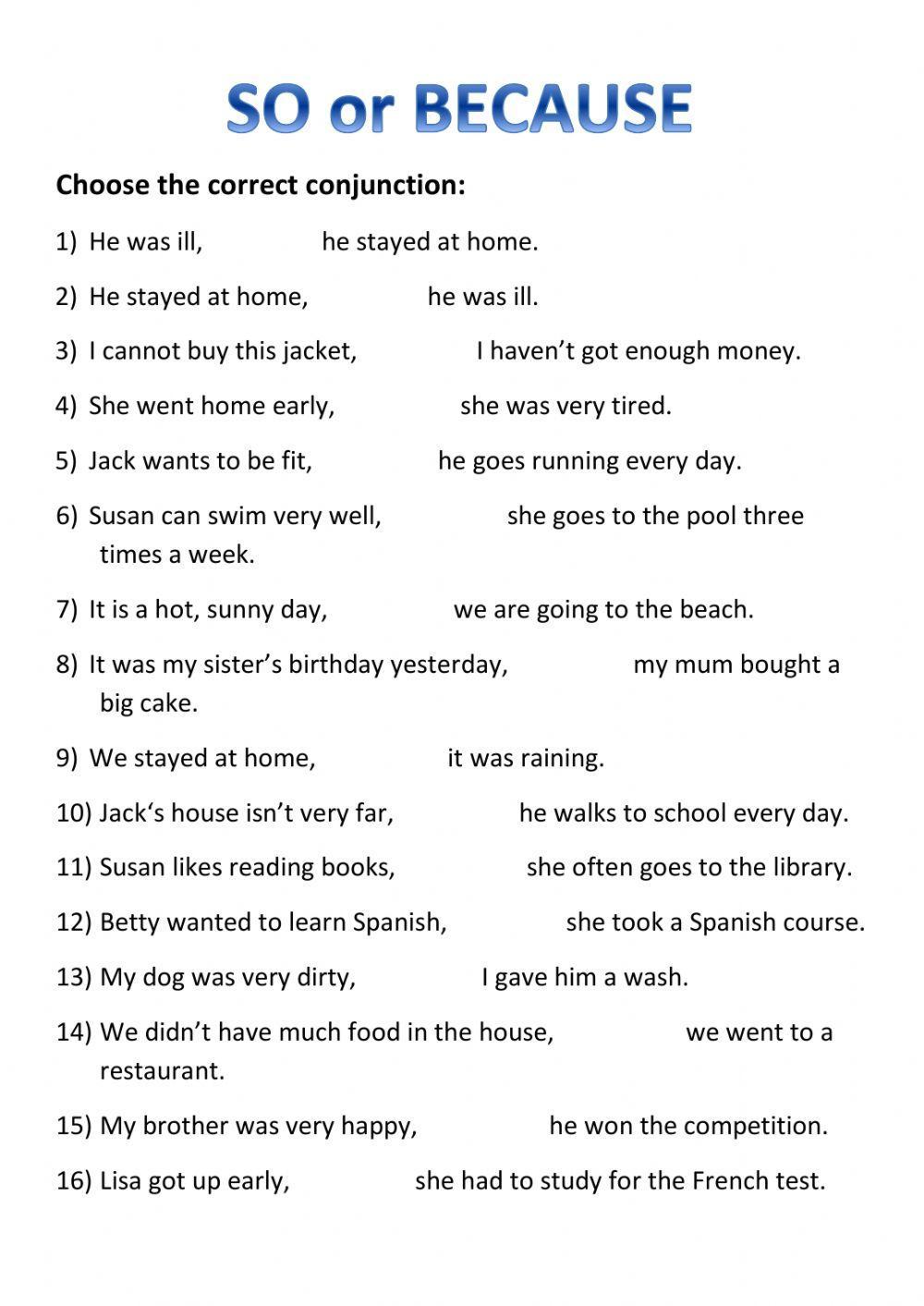
What is " So " its definition and example?

 What is " So " its definition and example? 

Definition : 

It is a coordinating conjunction . It is used to join reason clause with result clause . 

Its mean "therefore"

Example: 

1: I am tired so I want to go to bed .

2: she was ill so she went to the doctor.


Monday

what is "As + Noun " ? Its definition and Example :

 what is "As + Noun " ? Its definition and Example : 

Definition: 

"As " is a preposition its show "occupation or job" 

Example:

1: Bilal serves in oxford institute as a teacher .

2: He works in the hospital as a doctor .

3: she works in the restaurant as a waitress .


Sunday

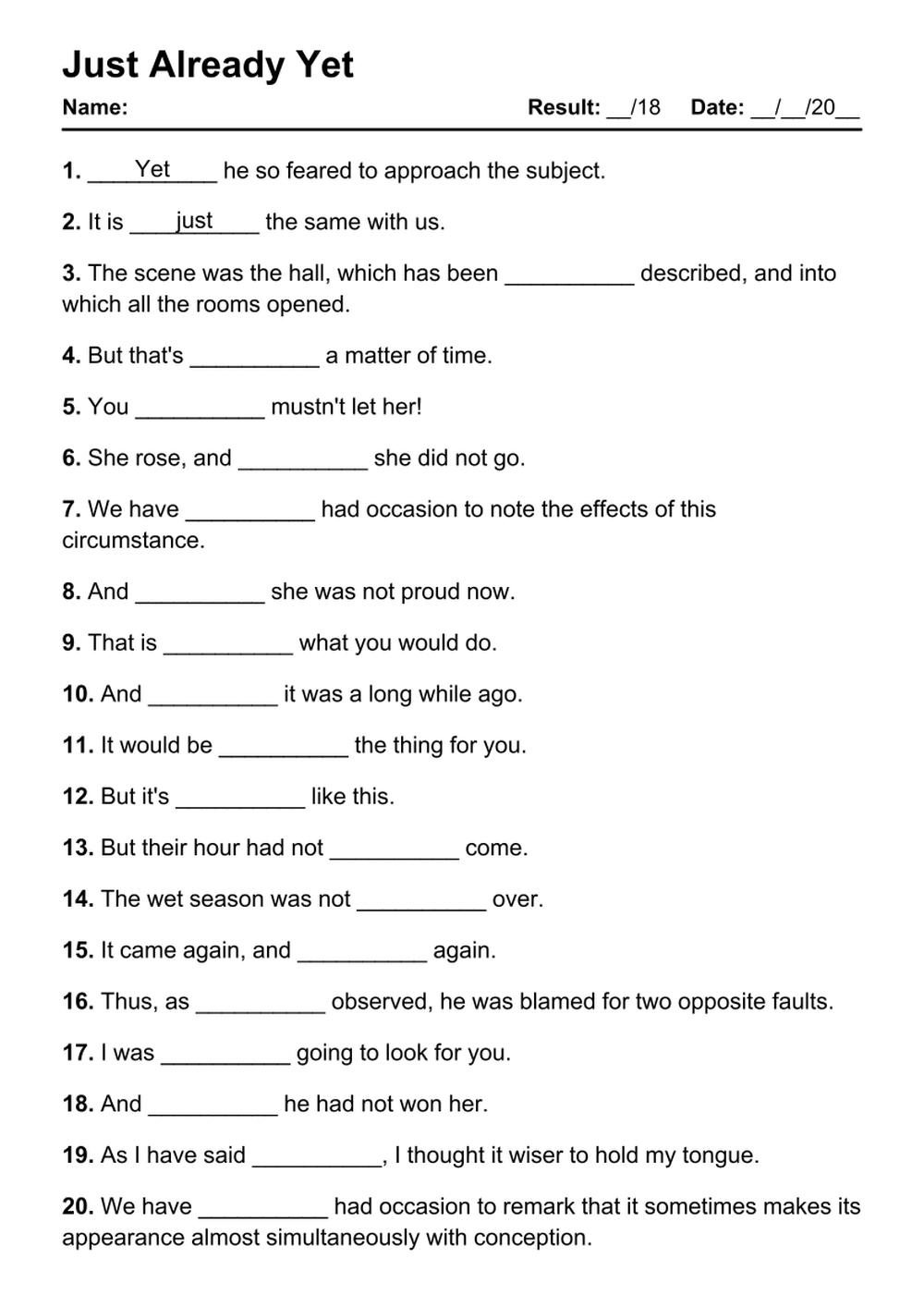
Definition of "Already " with example ?

 Definition of "Already " with example ?

Definition:

It is an indefinite adverb of time . 

Which mean "Prior to a specified time "

It shows an action that happened sooner  than ones expectation .

For example:

1: Mahum :   Mom come here and cook rice . 

  : Mom  :  Mahum I  have already cooked rice .


Friday

Professor Allama Dr . Muhammad Iqbal //works in English, Urdu , Persian .

Professor Allama Dr . Muhammad Iqbal //works in English, Urdu , Persian .


Iqbal stands alone in the post classical period of Islamic philosophy as a retest of the discipline within Muslim world. He is the only Islamic philosopher to make a serious attempt at grabbling with the problems of modem western philosophy thin an Islamic context. His thought has been extremely influential throughout the Islamic world today .


Iqbal introduces his notion of Khudi , or self. Arising from a desire to awaken the Muslim Ummah and drawing upon inspiration from western existentialists like Nietzsche, and Muslim spiritual teachers he empowers the Muslim individual Beyond its superficial, and important, role as a motivator for Muslims Khudi embodies a deep philosophical concept prevalent throughout his philosophical writings.


Iqbal's breadth and depth of knowledge is truly remarkable Being educated both in the east and the t gave him a unique perspective to tackle the problems of modern times. Below we sample some of his work, and some work related to him Iqbal wrote in English, Urdu and Farsi. Many links below are compliments of the Iqbal Academy.


Works :


In English:


1: The Development of Metaphysics in Persia (1908)

2:The Reconstruction of Religious Thought in Islam (1930).

3:The landmark work in Islamic philosophy by Iqbal. [alternate site]


In Urdu :


1. Bang-i Da (1924)- Call of the Marching Bell (alternate site) [English translation]

2. Bal-i Jibril 1935) Wings of Gabriel [alternate site][English translation]

3: Zarb-i kalim(1936)- The Rod of Moses [alternate site English translation]


In Persian (Farsi): [All of the below are English translations]


1: Aarar- i Khudi (1915) The Secrets of the Self

2: Rumuz- i Bekhudi(1918)- The Mysteries of Selflessness

3:Payam- i Mashriq (1923)- Message from the East

4: Zabur- i Ajam (1927)-Persian Psalms

5: Javidnama (1932)- To his son

6:Pas ChihBayadKard (1936)- What should then be done: O people of the East?

7: Armaghan- i Hijaz (1938)-Gift from Hijaz


Thursday

What is " For" with examples ?

 For :

It is a preposition . It shows purpose .

Example: 

1: She bought clothes for me .

2: He bought gift for her .

3: She made biryani for me. 


Wednesday

Historical Background to study : Sapir Whorf Hypothesis || Whorf contribution to the study of linguistic Relativity.


Historical Background to the Study :


Man lives in the world about him principally, indeed exclusively as language presents it to him Wilhelm Von Humboldt [Quist Adade,209 ]

The idea of language influencing thought was first clearly expressed in 19 century by German philosopher and linguist Wilhelm von Humboldt. He states that the diversity of languages is not a diversity of and sounds but a diversity of views of the world It was later adopted by the emerging American Anthropologist, such as Franz Boas and his student Edward Sapir. Afterwards, Sapir's student Benjamin Lee Whorf added much to the study of linguistics relativity, also known as Sapir Whorf Hypothesis. He studied the structures of Aztec and Hopi languages and added the observations to the study of human thought and behavior:


Sapir-Whorf Hypothesis :


→ Sapir-Whorf hypothesis or linguistics relativity in the idea that the different cultural concepts that are inherent part of a language influences the cognitive ability of the speakers of that language .This effect on common us return changes the worldview of the people and because of that they think and behave differently. In other words, the language one speaks influences his/her thinking and perspective of the world.

The hypothesis is divided into two distinct domains : the strong version and the weak version. They are not called weak and strong because the string version is stronger in its claim and the weak version weaker, but that how much these versions intensify the relationship of language and thought. According to the strong version. or linguistic determinism, language determines our thoughts. It defines the world around us for us. The language which is habitually used by an individual will shape the thoughts of that person about the world. Whereas the weak version, or the linguistic relativity, states that Language only influences our thoughts about the world. The strong deterministic view was rejected as untenable because of its being an extreme and its failure to provide any empirical evidence for its theoretical background Whorf claims that though people of a language or culture must arrive at different interpretations of the world view, but,


"The background linguistic system (in other words the grammar] of each language is not merely a reproducing instrument for voicing ideas but rather is itself the shaper of ideas, the program and guide for the individual's mental activity for his analysis of impression for his synthesis of his mental stock in. trade (Whorf, 1956)


Sapir realizes the importance of a language in a society and regards it as not just a medium of communication but an essential tool for living. In his most quoted passage, he writes:


Human beings do not live in the objective world alone, nor alone in the world of social activity as ordinarily understood but are very winch at the mercy of the particular language which has become the medium of expression for their society It is quite an illusion to imagine that one adjusts to reality essentially without the use of language and that language is merely on incidental means of solving specific problems of communication or reflection. The fact of the matter then the "real world" is to a large extent unconsciously built up on the language habits of the group He tee and hear and otherwise experience very largely at we do because the language habits of our community predispose certain choices of interpretation (Sapir, Selected Writings in Language. Culture and Personality, 1949)


Whorf's Contribution to the Study of Linguistic Relativity :


linguistics relativity states that every language is structurally unique and that the structure of the language.


Influence the way speakers of that language think or behave because they think, and behave according to their different language structures, the worldviews and the perspectives about the world of those speakers would also be different . As mentioned earlier, humans live in a world with the same concepts but with different labels attached, these labels help the speakers to look at the concepts differently. We have particular subjective concepts such as truth, beauty, and sin etc. which are interpreted by everyone differently. According to the hypothesis, we live in a subjective world, somewhat different worlds. The more dissimilar two languages are, the more difficult it would be to transfer cultural concepts for both languages Whorf talks about two problems in his relativity Principle [ Kempton ]


1:Are our concepts of time, space and matter by their experience the same as for other people? Or are they conditioned by the structures of our languages?

2. Is there any connection between

a : Cultural and behavioral norms.

b : Large-scale linguistic pattern


Whorf supports problem 1 by stating that different parts of language tend to change with time and with the development of the world. Thus, the lexical items referring to objects or ideas change and that brings a shift in the thinking as well. For example the modern technological references of the objects not only remain, let us say nouns but develop into other grammatical categories as well. Google is now not only a search engine, Google is a verb as in I don't know the meaning of this word Google it. It is an adjective too, as in "Don't argue with her That google can literally beat you with facts" And so we are not only using digital terms but are thinking digital too. Whorf says that a language limits the development of a culture.


That is to because a language is a systems, not just an assemblage of norms Language this represents the mass mind, it is affected by inventions and innovations, but affected little and slowly, whereas to inventors and innovators i legislates with the decree immediate. (Whorf, 1956)


Here we come to the problem 2 which is: if language forms ideas, it also plays a role in shaping the attitudes of individuals. Hence, individuals speaking different languages must have different worldviews and behaviors. The grammatical categories available in a particular language not only help the users of that language to perceive the world in a certain way but also at the same time limit such perception. You perceive only what your language allows you to perceive. Your language controls your worldview.


Fishman looks into some claims of Sapir-Whorf hypothesis Among these claims one is that, if speakers of one language have certain words to describe things and speakers of another language lack similar words, then speakers of the first language will find it easier to talk about those things (Hussein, 2012), Westerners can talk about impediments (legal bars to a marriage) and Pakhtuns will talk about " (khpay arts, when bride's family goes to groom's house for ring ceremony) but both will not understand what the other means until an explanation is made. There are certain thoughts of an individual in one language that cannot be understood by those who live in another language community.


English notes

What is sentence ? Write its components with example?

 What is sentence ? Write its components with example?  Sentence:  Definition : Group of words which has both subject and verb is called sen...